

 English
 Spanish
 French
 German
 Italian
 Chinese (Simplified)
 Japanese
 Korean
 Arabic
 Portuguese
 Send Inquiry
Textile Formaldehyde Testing Machine
Price 2800 USD ($)/ Unit
MOQ : 1 Unit
Textile Formaldehyde Testing Machine Specification
- Humidity
- 40%~80% RH
- Port Size
- 6 mm
- Gas Pressure
- 0.1 MPa
- Test Material
- Fabric, Yarn, Garments
- Specimen Size
- 100mm x 50mm approx.
- Number of Specimens
- 1-4
- Test Range
- 0~500 mg/kg
- Temperature
- 20~25°C
- Type
- Bench Top
- Material
- Stainless Steel and Aluminum Alloy
- Power
- 220V/50Hz, 100W
- Power Source
- Electric
- Dimension (L*W*H)
- 480mm x 420mm x 550mm
- Weight
- 32 kg
- Usage
- Formaldehyde Content Analysis in Textile Samples
- Application
- Textile Testing Laboratory, Industrial Textile Quality Control
- Control Mode
- Microprocessor control
- Included Accessories
- Specimen Holder, Measuring Cylinder, Glassware
- Chamber Material
- Corrosion Resistant Stainless Steel
- Detection Time
- Approx. 30 min per test
- Measuring Principle
- Spectrophotometric
- Extraction Method
- Distillation
- Display Type
- Digital LCD Display
- Accuracy
- 2%
- Standards Compliance
- AATCC 112, ISO 14184-1
- Safety Features
- Overheat and Overpressure Protection
Textile Formaldehyde Testing Machine Trade Information
- Minimum Order Quantity
- 1 Unit
- FOB Port
- shenzhen
- Supply Ability
- 10 Units Per Month
- Delivery Time
- 1 Week
- Packaging Details
- Each set protected with resin fiber and PP film, then put into Strong wooden case with operation manual and video inside.
- Main Domestic Market
- Tripura, Himachal Pradesh, South India, Central India, North India, East India, Andaman and Nicobar Islands, Andhra Pradesh, Assam, Arunachal Pradesh, Bihar, Chandigarh, Delhi, Gujarat, Goa, Haryana, Jammu and Kashmir, Jharkhand, Karnataka, Kerala, Madhya Pradesh, Maharashtra, Mizoram, Meghalaya, Manipur, Odisha, Punjab, Rajasthan, Sikkim, Tamil Nadu, Telangana, Uttar Pradesh, West Bengal, Pondicherry, Nagaland, Daman and Diu, Uttarakhand, Dadra and Nagar Haveli, Lakshadweep, West India, Chhattisgarh, All India
- Certifications
- CE, SGS, ISO
Textile Formaldehyde Testing Machine About
Introduction:
Textile Formaldehyde Tester is Used To Test Formaldehyde Content In Various Fabrics.
Textiles Formaldehyde Tester Fine-Grained Textiles Are Extracted In A Water Bath At 40 C For A Period Of Time. Formaldehyde Extracted From The Fabric Is Absorbed By Water And The Extract Is Developed With Acetylacetone (yellow). The Yellow Compound Has A Visible Selective Absorption, So The Use Of Colorimetric Analysis Method Can Be Measured In The Textile Formaldehyde Formaldehyde Content Of Samples Tested.
Technical Parameters:
| Work Mode | Microcomputer Control |
| Test Range | Transmittance: 0% -100% Absorbance: 0-2.0 Formaldehyde Content: 0 -500mg / Kg |
| Wavelength Range | 300-1000nm (Can Be Adjusted) |
| Wavelength Accuracy | 3nm |
| Wavelength Repeatability | 1nm |
| Light Source | Super Highly Bright Light Emitting Diode, Wavelength 412nm |
| Power Supply | Single Phase, 220v, 50hz |
| Weight | 10kg |
| Dimension(Lx W X H) | 475x315x155mm |
Principle:
Textile Formaldehyde Tester Of Formaldehyde In The Air Reacts With The Phenol Reagent To Form The Oxazine. The Oxazine Is Oxidized In The Acid Solution By High-Iron Ions To Blue-Green Compounds. According To The Color Depth, - See More At:
Advanced and Accurate Formaldehyde Detection
This machine combines microprocessor control with spectrophotometric detection, achieving exceptional accuracy for formaldehyde measurement in textiles. Its digital LCD display provides clear, real-time data, and its compliance with international standards ensures reliable results for regulatory and quality control purposes.
Robust and Safe Laboratory Equipment
Designed with durability in mind, the chamber is constructed from corrosion-resistant stainless steel. The system also integrates critical safety features, such as automatic overheat and overpressure protection, delivering safe and long-lasting use even in busy industrial or laboratory settings.
FAQs of Textile Formaldehyde Testing Machine:
Q: How does the Textile Formaldehyde Testing Machine ensure accurate measurement results?
A: The machine utilizes a microprocessor-controlled spectrophotometric principle paired with a distillation extraction method, enabling precise formaldehyde quantification in textile samples. It features an accuracy of 2% and delivers consistent results in approximately 30 minutes per test.Q: What types of textile materials can be analyzed with this machine?
A: This testing machine can measure formaldehyde content in a wide range of textile materials, including fabric, yarn, and garments, with each test accommodating specimen sizes of approximately 100mm x 50mm.Q: When is it necessary to test formaldehyde levels in textiles?
A: Formaldehyde testing is essential during textile production, after dyeing, finishing processes, or prior to distribution and export, ensuring compliance with safety regulations and international standards like AATCC 112 and ISO 14184-1.Q: Where is the Textile Formaldehyde Testing Machine most commonly used?
A: This equipment is ideal for use in textile testing laboratories, industrial textile quality control departments, and is frequently adopted by manufacturers, exporters, dealers, and suppliers across India for reliable formaldehyde analysis.Q: What is the process for conducting a formaldehyde content test with this machine?
A: To perform a test, place 1-4 prepared textile specimens in the included holder, follow the distillation extraction procedure, and utilize the spectrophotometric system. The digital LCD display will present results after approximately 30 minutes.Q: How does the machine safeguard users and samples during testing?
A: It incorporates overheat and overpressure protection, alongside a robust stainless steel construction, ensuring the safety of both operators and specimens throughout the testing process.Q: What are the benefits of using this formaldehyde testing machine for textile quality control?
A: The main advantages include rapid and accurate results, compliance with global standards, versatile application across different textiles, and enhanced safetyall contributing to improved product quality and regulatory approval.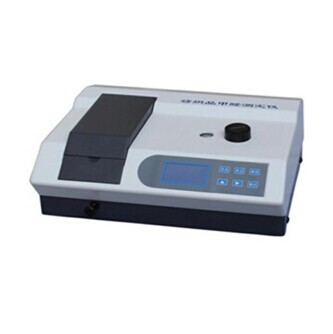
Tell us about your requirement

Price:
Quantity
Select Unit
- 50
- 100
- 200
- 250
- 500
- 1000+
Additional detail
Mobile number
Email

More Products in Textile Test Equipment Category

Textiles Light Fastness Tester
Price 6500 USD ($) / Unit
Minimum Order Quantity : 1 Unit
Type : Other, Light Fastness Tester
Material : Mild Steel
Usage : Laboratory Testing
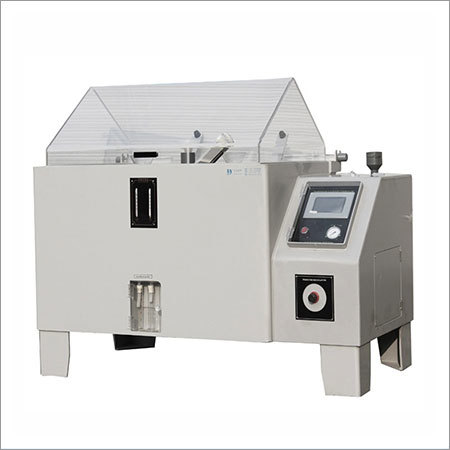
Led Lights Salt Spray Corrosion Chamber
Price Range 1500.00 - 6500.00 INR
Minimum Order Quantity : 1 Set
Type : Other, Salt Spray (Fog) Testing Chamber
Material : Stainless Steel / PVC / FRP
Usage : Corrosion Resistance Testing
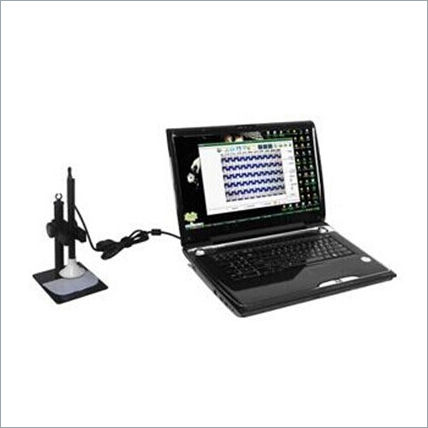
Fabric Density Meter
Price 1500 USD ($) / Unit
Minimum Order Quantity : 1 Unit
Type : Other, Handheld Fabric Density Meter
Material : Aluminum Body with Glass Scale
Usage : Measuring Fabric Density (Ends and Picks per Inch or cm)
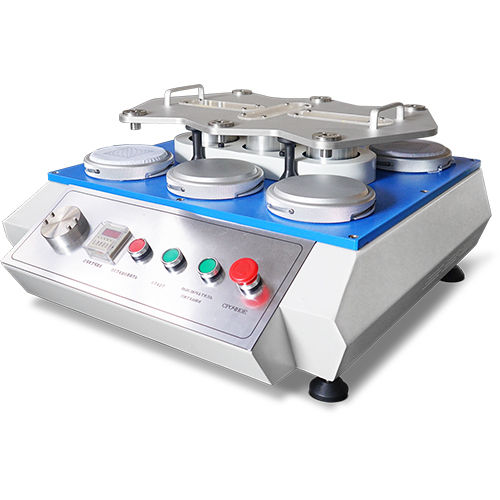
Martindale Abrasion Tester
Price 1800 USD ($) / Unit
Minimum Order Quantity : 1 Unit
Type : Martindale Abrasion Tester
Material : Mild Steel
Usage : Industrial

Contact Details
- FACTORY ADD: No.13 Daxin Street, Daluosha Industrial Zone, Daojiao Town,Dongguan - 523710, Guangdong, China
- Phone :86-1591-7693151
- haidads@qc-test.cn
 Send Inquiry
Email us : haidads@qc-test.cn
- Ms Lisa (Manager)
- Mobile : +8613662707979, +8613829267288, +8615016776323, +8618373745787, +8618236912012, +8613602361535, +8613925747786

|


 |
HAIDA INTERNATIONAL EQUIPMENT CO., LTD.
All Rights Reserved.(Terms of Use) Developed and Managed by Infocom Network Private Limited. |
