

 English
 Spanish
 French
 German
 Italian
 Chinese (Simplified)
 Japanese
 Korean
 Arabic
 Portuguese
 Send Inquiry
Drawer and door durability tester
Price 900 USD ($)/ Set
MOQ : 1 Set
Drawer and door durability tester Specification
- Resolution
- 1 cycle
- Specimen Size
- Customizable, up to 1200 mm width
- Features
- Programmable cycles, digital display, easy specimen installation
- Automation Grade
- Fully automatic
- Equipment Type
- Drawer and Door Durability Tester
- Hardness
- N/A to product
- Response Time
- <1 s
- Gas Pressure
- 0.4~0.7 MPa
- Interface Type
- RS232/USB
- Frequency
- 50/60 Hz
- Accuracy
- ±1 cycle
- Port Size
- Standard air connection, 8 mm OD
- Display Type
- Digital display
- Mounting Type
- Floor standing
- Temperature
- 10-40°C
- Power Supply
- AC 220V, 50/60Hz
- Max Height
- Up to 1500 mm
- Measuring Range
- 0-100,000 cycles
- Operating Voltage
- AC 220V
- Humidity
- 20-90% RH
- Application
- Testing the durability of drawers and doors
- Number of Specimens
- 1 specimen at a time
- Test Range
- Drawer/door opening and closing
- Usage
- Furniture hardware testing laboratories
- Capacity
- Up to 50 kg load
- Machine Weight
- Approx. 150 kg
- Test Speed
- 5-30 cycles/min
- Test Width
- Up to 1200 mm
- Test Stroke
- Adjustable, 50-700 mm
- Control Mode
- Touch screen PLC control
- Data Logging
- Data export via USB
- Drive System
- Servo motor driven linear actuator
- Safety Devices
- Emergency stop, overload protection
- Compliant Standards
- EN 14749, BIFMA X5.5
- Frame Material
- Powder-coated steel
- Fixture Adjustment
- Adjustable clamping for different drawer/door types
- Cycle Counter
- Preset and real-time count display
- Noise Level
- <70 dB during operation
Drawer and door durability tester Trade Information
- Minimum Order Quantity
- 1 Set
- FOB Port
- Shenzhen
- Supply Ability
- 10 Sets Per Month
- Delivery Time
- 1 Week
- Packaging Details
- Each set protected with resin fiber and PP film, then put into Strong wooden case with operation manual and video inside.
- Certifications
- CE,ISO
Drawer and door durability tester About
Drawer And Door Durability Tester(Hd-7749)
The Usage:
The Drawer And Door Durability Test Machine Is Used In Testing Drawer Slide,Slide Rail. Our Company Developed A Drawer/Door Push-Pull Test Machine, It Can Accordance With Domestic And International Customers A Variety Of Quality Requirements.
The Main Parameters:
- Drawer Height:150m 800mm(Adjustable)
- Capacity:1 1000n
- Test Speed:0.8m/S
- Travel Error: 2.5mm
- Test Travel:0 800mm
- Controller: Plc Control,Lcd Display Interface
- 6 Digits Pre-Set Counter For Test Cycle Setting
- Power:1 ,Ac 220v,50hz
- Compressed Air Requirement:6 Bar
Precision Testing for Furniture Durability
This tester evaluates the opening and closing durability of drawers and doors according to international standards. The servo motor-driven actuator, adjustable test stroke (50700 mm), and programmable cycles ensure versatile testing for various specimen sizes and weights. Its digital display provides cycle accuracy, real-time monitoring, and easy data export via USB, making it suitable for quality control and research environments.
User-Friendly and Safe Operation
Equipped with touch screen PLC control and adjustable clamping fixtures, the tester provides straightforward installation and configuration for different types of drawers and doors. Safety features such as an emergency stop and overload protection add essential protection for operators. Designed with a low noise level (<70 dB) and built from powder-coated steel, it delivers reliable operation while maintaining a comfortable laboratory environment.
Compliance and Data Management
The tester meets EN 14749 and BIFMA X5.5 compliance requirements, ensuring trusted results for manufacturers, laboratories, and suppliers. Data logging and USB export support analytical reporting, while RS232 connectivity allows system integration. Flexible power and air connections (AC 220V, 0.40.7 MPa gas) further facilitate installation in laboratory settings.
FAQs of Drawer and door durability tester:
Q: How is the Drawer and Door Durability Tester installed and operated?
A: The tester is floor-standing and requires a standard AC 220V power supply and an 8 mm air connection. Installation involves fixing the adjustable clamping fixture to the desired drawer or door specimen, selecting test parameters using the touch screen PLC control, and starting the cycle. User safety is assured by emergency stop and overload protection devices.Q: What types and sizes of drawers and doors can be tested?
A: The equipment accommodates one specimen at a time, with customizable sizes up to 1200 mm width and 1500 mm height, supporting up to 50 kg. Adjustable fixtures and test stroke (50700 mm) allow it to adapt to different drawer and door types, making it suitable for a wide range of furniture hardware testing.Q: When should I use data export and logging features?
A: Data logging is ideal for recording cycle counts and monitoring test results. Use USB or RS232 interface export after tests for documentation, analysis, or sharing information with team members. Real-time and preset counters provide accuracy (1 cycle) and immediate feedback for every test cycle.Q: Where can the tester be used most effectively?
A: This device is best suited for furniture hardware testing laboratories, manufacturing quality control departments, and research facilities requiring compliance with EN 14749 and BIFMA X5.5 standards. Its robust design and automation make it useful for dealers, exporters, and manufacturers seeking reliable durability testing.Q: What is the process for adjusting the fixture for different specimens?
A: Fixture adjustment involves repositioning the clamping arms to securely hold the drawer or door based on its size (up to 1200 mm width). Test stroke can be set from 50 to 700 mm using the PLC interface, ensuring firm and accurate motion control during cycles.Q: How does programmable cycle testing benefit users?
A: Programmable cycles allow users to set specific test ranges (up to 100,000 cycles) and speeds (530 cycles/min), providing flexibility to simulate real-life usage scenarios. Digital cycle display and fast response (<1 s) ensure precise monitoring, helping users identify hardware durability and lifespan efficiently.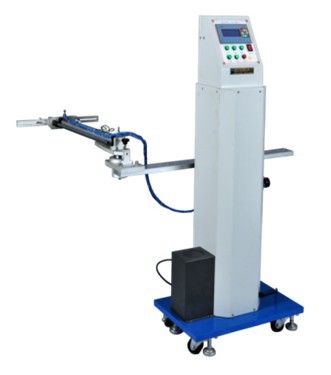
Tell us about your requirement

Price:
Quantity
Select Unit
- 50
- 100
- 200
- 250
- 500
- 1000+
Additional detail
Mobile number
Email

More Products in Furniture Test Equipment Category
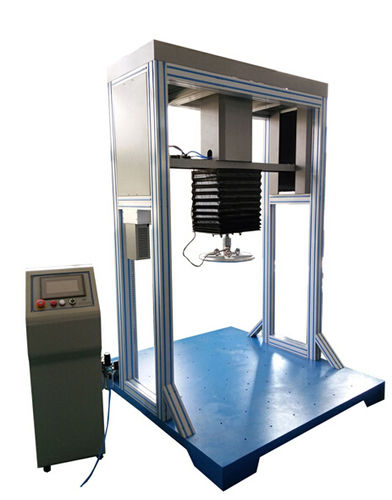
Chair Drop Impact Tester
Price 4999 USD ($) / Unit
Minimum Order Quantity : 1 Unit
Temperature : 10C 40C
Test Speed : 0.5 1.5 m/s adjustable
Mounting Type : Floor standing
Power Supply : AC 220V, 50Hz
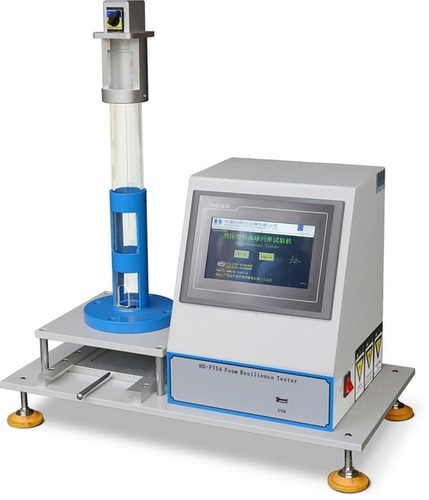
Foam Rebound Test Machine
Price 699 USD ($) / Unit
Minimum Order Quantity : 1 Unit
Temperature : 10~35C
Test Speed : 100~300 mm/s adjustable
Mounting Type : Tabletop
Power Supply : AC 220V, 50/60 Hz
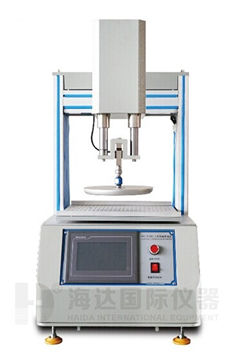
Foam Pounding Fatigue Tester
Price 800 USD ($) / Unit
Minimum Order Quantity : 1 Unit
Temperature : 10C ~ 35C
Test Speed : 60 cycles/min
Mounting Type : Floor standing
Power Supply : AC 220V, 50Hz
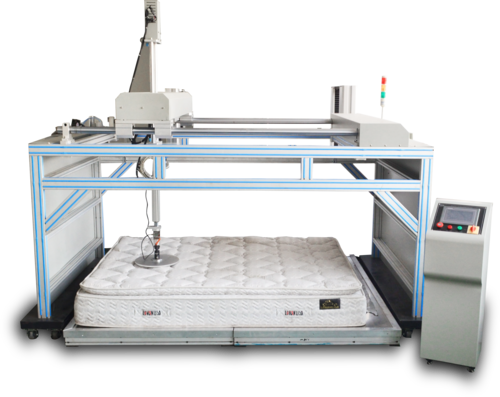
Mattress firttress tester
Price 6800 USD ($) / Unit
Minimum Order Quantity : 1 Unit
Temperature : 5C~35C
Test Speed : 16 2 cycles/min
Mounting Type : Floor standing
Power Supply : AC 220V, 50 Hz

Contact Details
- FACTORY ADD: No.13 Daxin Street, Daluosha Industrial Zone, Daojiao Town,Dongguan - 523710, Guangdong, China
- Phone :86-1591-7693151
- haidads@qc-test.cn
 Send Inquiry
Email us : haidads@qc-test.cn
- Ms Lisa (Manager)
- Mobile : +8613662707979, +8613829267288, +8615016776323, +8618373745787, +8618236912012, +8613602361535, +8613925747786

|


 |
HAIDA INTERNATIONAL EQUIPMENT CO., LTD.
All Rights Reserved.(Terms of Use) Developed and Managed by Infocom Network Private Limited. |
