

 English
 Spanish
 French
 German
 Italian
 Chinese (Simplified)
 Japanese
 Korean
 Arabic
 Portuguese
 Send Inquiry
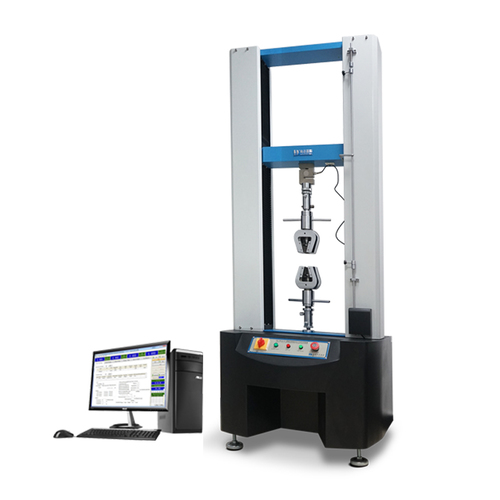
computerized Fabric tensile testing machine
Price 2200 USD ($)/ Set
MOQ : 1 Set
computerized Fabric tensile testing machine Specification
- Power Source
- Electric
- Phase
- Single Phase
- Accuracy
- ±0.5% of indicated value
- Machine Speed
- Adjustable via software control
- Color
- White & Blue
- Load Capacity
- 500 N to 5000 N (configurable as per requirement)
- Speed Range
- 10 mm/min to 500 mm/min
- Resolution
- 0.01 N
- Stroke Length
- 600 mm (maximum travel)
- Capacity
- Up to 5 kN
- Dimension (L*W*H)
- 700 x 500 x 1600 mm
- Application
- Textile, Fabric, Yarn, Fiber tensile strength measurement
- Weight
- Approx. 120 kg
- Product Type
- Computerized Fabric Tensile Testing Machine
- Sensor
- High Precision Load Cell
- Power Consumption
- 700 W
- Voltage
- 220V AC
- Control System
- Microprocessor-based with computerized interface
- Features
- USB/RS232 data output, Automatic overload protection, Emergency stop
- Screw Size
- Ball screw, 20 mm dia
- Power
- AC 220V ±10%, 50Hz
- Operating Temperature
- 10°C to 40°C
- Frequency
- 50 Hz
- Automatic Grade
- Fully Automatic
- Material
- Mild steel body with powder coating
- Elongation Measurement
- Up to 1000 mm with 0.1 mm accuracy
- Safety Features
- Auto return on overload, Emergency stop switch, Over-travel limit
- Display
- Digital LCD with real-time graph plotting
- Operating Modes
- Tensile, Elongation, Burst, Tearing (optional attachments required)
- Ambient Humidity
- 80% RH, non-condensing
- Test Standard Compliance
- ASTM D5034, ISO 13934, BS 4305 & other international standards
- Grips
- Interchangeable jaws for various fabric types
- Data Storage
- Internal memory & PC data export
- User Interface
- Touch screen and keyboard input
- Software Compatibility
- Windows-based analysis and reporting suite
computerized Fabric tensile testing machine Trade Information
- Minimum Order Quantity
- 1 Set
- FOB Port
- SHENZHEN
- Supply Ability
- 15 Sets Per Week
- Delivery Time
- 5 Days
- Packaging Details
- Each set protected with resin fiber and PP film, then put into Strong wooden case with operation manual and video inside. CE,ISO
- Main Export Market(s)
- South America, Australia, Eastern Europe, Middle East, Western Europe, Africa, Central America, Asia, North America
- Certifications
- CE,ISO
computerized Fabric tensile testing machine About
Purpose:
This tester is designed to conduct tensile, compression, adhesive strength, peel, tear and bending tests etc. for metal, rubber, plastics, textile, leather, paper, composite materials and so on.
Software Function:
Test & Control System is designed for PC Electronic Universal Testing Machines, PC Hydraulic Universal Testing Machines and PC Compression testers; can conduct tensile, compression, bending, shearing, tearing and peeling test; use PC and interface board for data collection, preservation, processing and printing test result; can calculate max force, yield strength, average peeling force, max deformation, yield point, elastic modulus and other parameters; can conduct curve graphics processing, multi-sensor support, video and image interface, flexible data processing, MS-ACCESS database support, making more powerful function of system.
Software Protection: over stroke, over capacity protection.
Advanced Testing and Compliance
This machine delivers robust measurement capabilities for textile applications, ensuring compliance with major international standards such as ASTM, ISO, and BS. Its microprocessor-based control and high-precision load cell provide accuracy within 0.5% of the indicated value, meeting the rigorous demands of manufacturers and laboratories alike.
Versatile Operation and User-Friendly Interface
With fully automatic grade and customizable operating modes, users can test tensile, elongation, burst, and tear properties effortlessly. The intuitive touch screen and keyboard controls streamline workflows, while software compatibility allows sophisticated analysis and reporting on Windows platforms.
Safe, Efficient, and Reliable Performance
Key safety features like automatic overload protection, emergency stop switch, and over-travel limit safeguard both operator and sample. Adjustable speed control, stable performance in 10C to 40C environments, and durable mild steel construction ensure the machine meets laboratory and industrial needs. Internal memory plus seamless PC export maintains convenient data management.
FAQs of computerized Fabric tensile testing machine:
Q: How does the computerized fabric tensile testing machine benefit textile testing operations?
A: This machine offers precision measurement of tensile, elongation, burst, and tear properties with real-time graph display. It streamlines workflows through automatic operation, fast data analysis, and compliance with standards like ASTM and ISO, enhancing both quality control and efficiency.Q: What types of fabrics and materials can be tested using this machine?
A: Thanks to interchangeable grips and up to 5 kN load capacity, the device can test textiles, fabrics, yarns, and fibers of varying thicknesses and strengths. This versatility makes it suitable for diverse laboratory, manufacturer, and supplier applications.Q: Where can data from the tests be stored and exported for further analysis?
A: Test data is stored in the machines internal memory and can be exported to a PC via USB or RS232 interface. The Windows-compatible software enables in-depth analysis, reporting, and record-keeping for distributors, exporters, and laboratories.Q: How safe is operating this tensile testing machine during routine tests?
A: The machine is equipped with multiple safety mechanisms such as automatic overload protection, emergency stop switch, and over-travel limits. These features minimize risk to both operators and samples during high-force testing operations.Q: When should the optional attachments for burst and tearing tests be used?
A: Optional attachments should be installed when specific burst or tearing strength tests are required. These modules can be easily added to expand the machines capabilities according to changing industry or research requirements.Q: What is the process for setting up and operating the machine?
A: To operate, select suitable grips for your fabric type, configure test settings via touch screen or keyboard, and use the integrated software to choose the appropriate test mode. Adjust speed and parameters as needed, then begin testing with safety features active for reliable results.Q: Why choose a microprocessor-based computerized tensile tester over manual alternatives?
A: Microprocessor-based controls offer higher accuracy, automation, and rapid data processing. The digital interface provides instant feedback, advanced plotting, and easier compliance with international standards, resulting in more consistent, reproducible test results compared to manual systems.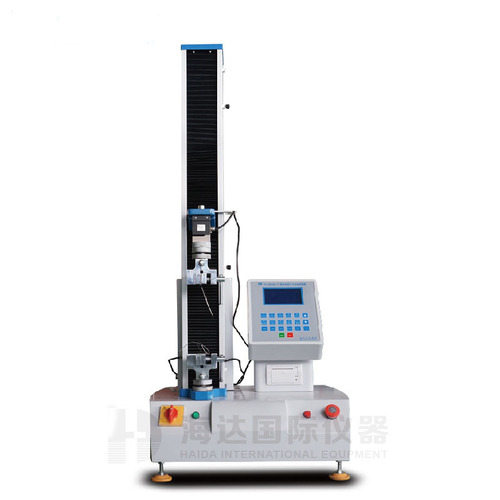
Tell us about your requirement

Price:
Quantity
Select Unit
- 50
- 100
- 200
- 250
- 500
- 1000+
Additional detail
Mobile number
Email

More Products in Tensile Testing Equipment Category
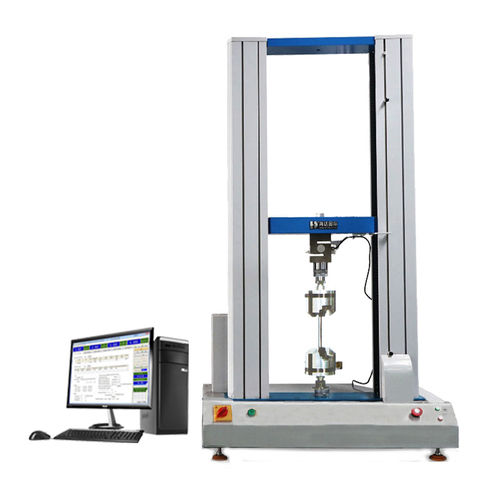
Digital Electronic Tensile Testing Machine
Price 1200 USD ($) / Unit
Minimum Order Quantity : 1 Unit
Sensor : Highprecision load cell
Product Type : Digital Electronic Tensile Testing Machine
Application : Metals, polymers, cables, rubber, wires, fabrics etc.
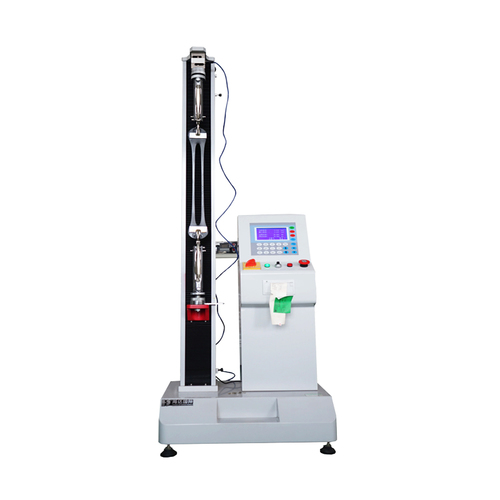
Factory Direct Wire shear Strength Test Machine
Price 900 USD ($) / Unit
Minimum Order Quantity : 1 Unit
Sensor : Highprecision load cell
Product Type : Wire Shear Strength Test Machine
Application : Wire shear strength, cable testing, metal wire quality assurance
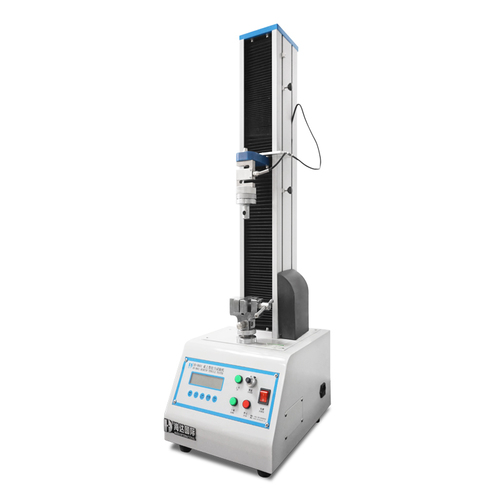
Snap Button Tester
Price 1800 USD ($) / Unit
Minimum Order Quantity : 1 Unit
Sensor : Micro Load Cell
Product Type : Manual Snap Button Tester
Application : Testing holding and breaking strength of snap buttons, fasteners, rivets, and zippers
Microcomputer Electronic Universal Rubber/Plastic Elongation Strength Tensile Testing Machine
Price Range 5000.00 - 10000.00 USD ($)
Minimum Order Quantity : 1 Set
Sensor : Highprecision load cell
Product Type : Microcomputer Electronic Universal Testing Machine
Application : Rubber, Plastic, Cable, Wire, Textile, Tape, Leather tensile and elongation test

Contact Details
- FACTORY ADD: No.13 Daxin Street, Daluosha Industrial Zone, Daojiao Town,Dongguan - 523710, Guangdong, China
- Phone :86-1591-7693151
- haidads@qc-test.cn
 Send Inquiry
Email us : haidads@qc-test.cn
- Ms Lisa (Manager)
- Mobile : +8613662707979, +8613829267288, +8615016776323, +8618373745787, +8618236912012, +8613602361535, +8613925747786

|


 |
HAIDA INTERNATIONAL EQUIPMENT CO., LTD.
All Rights Reserved.(Terms of Use) Developed and Managed by Infocom Network Private Limited. |
